
Table of Contents
- Introduction to Aerobond SBR 40
- What is Aerobond SBR 40?
- Why Choose Aerobond SBR 40 for Construction Applications?
- Key Benefits of Aerobond SBR 40
- Applications of Aerobond SBR 40 in Modern Construction
- How Aerobond SBR 40 Improves Concrete Performance
- Frequently Asked Questions
- Conclusion
Introduction to Aerobond SBR 40
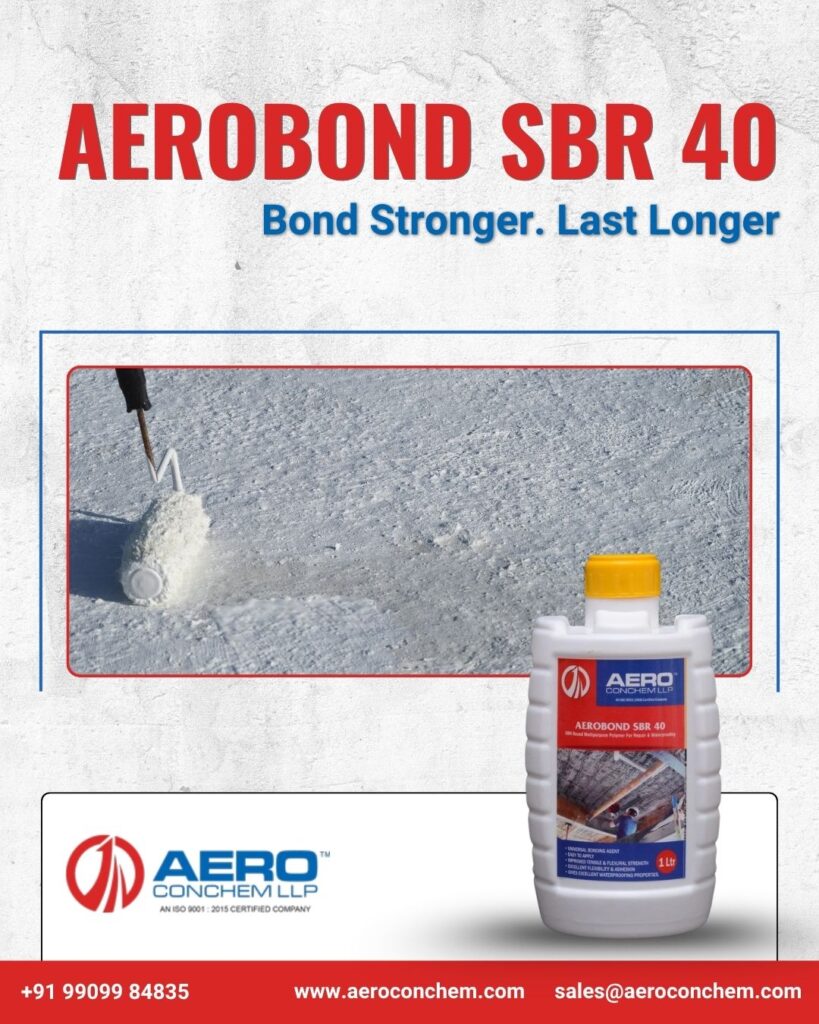
Aerobond SBR 40 is an advanced SBR-based multipurpose polymer designed to improve bonding, strength, flexibility, and durability in cement-based repair and construction applications. In modern construction projects, achieving strong adhesion between old and new concrete surfaces is a major challenge. Poor bonding often results in cracks, surface failure, water penetration, and reduced service life of structures.
It works as a high-performance bonding agent that enhances the mechanical properties of cement mixtures while improving resistance against environmental damage. It is widely suitable for concrete repairs, plastering, waterproofing treatments, flooring applications, and renovation projects where long-lasting performance is required.
With increasing demand for durable construction materials, polymer-modified solutions have become an important part of infrastructure development. According to construction material guidelines published by the National Building Code of India, improving concrete durability and repair quality plays an important role in extending the life of structures.
For contractors, engineers, and builders looking for reliable repair solutions, Aerobond SBR 40 provides an effective combination of bonding strength, flexibility, and waterproofing properties.
What is Aerobond SBR 40?
Aerobond SBR 40 is a Styrene Butadiene Rubber (SBR) polymer-based bonding compound specially formulated for mixing with cement and mortar systems. The product improves adhesion between existing concrete surfaces and new repair materials, creating a stronger connection that helps prevent detachment and surface deterioration.
Traditional cement-based repair materials often have limitations such as shrinkage, cracking, and weak bonding with old concrete. By adding an SBR polymer solution, the cement matrix becomes more flexible and resistant to stress caused by temperature changes, moisture movement, and structural vibrations.
The advanced formulation of Aerobond SBR 40 makes it suitable for both small repair works and large-scale industrial construction projects. It can be used in residential buildings, commercial structures, factories, bridges, water tanks, basements, and other areas where concrete protection is essential.
Why Choose Aerobond SBR 40 for Construction Applications?
Choosing the right bonding solution directly affects the strength and durability of any repair work offers superior performance compared with ordinary bonding methods because it improves the overall quality of cement-based systems.
The product provides excellent adhesion between old and new concrete, helping repair materials remain firmly attached even under demanding conditions. Its polymer technology reduces water absorption and improves resistance against moisture-related damage.
Another important advantage is its flexibility. Concrete naturally expands and contracts due to temperature variations. A rigid repair system may develop cracks over time, but polymer-modified solutions like these provide better flexibility and long-term stability.
For professional construction applications, using a high-quality SBR bonding agent can reduce maintenance requirements and increase the lifespan of repaired surfaces.
7 Powerful Benefits of Aerobond SBR 40
1. Excellent Bonding Strength
One of the biggest advantages of SBR 40 is its superior bonding capability. It creates a strong connection between old concrete surfaces and new repair materials, reducing the chances of peeling, cracking, and separation.
This makes it highly effective for concrete repair works where long-lasting adhesion is required. Whether repairing damaged concrete structures or applying new mortar layers, the product improves the overall strength of the system.
2. Improves Concrete Durability
Concrete structures are exposed to moisture, chemicals, weather changes, and mechanical stress. Over time, these factors can weaken concrete surfaces.
SBR 40 improves durability by enhancing the internal structure of cement mixtures. The polymer modification helps reduce permeability and improve resistance against external factors, resulting in stronger and longer-lasting concrete surfaces.
3. Enhances Waterproofing Performance
Water penetration is one of the most common reasons behind concrete deterioration. Moisture entering cracks and pores can damage reinforcement steel and reduce structural strength.
Aerobond SBR 40 helps improve waterproofing properties by reducing water absorption in cement-based applications. It is suitable for areas such as basements, bathrooms, water tanks, terraces, and other moisture-prone locations.
4. Provides Better Flexibility and Crack Resistance
Concrete movement caused by temperature changes and structural stress can lead to cracks. It improves flexibility in repair mortar, allowing surfaces to handle minor movements without early failure.
This crack resistance makes it useful for repair applications where long service life is required.
5. Reduces Shrinkage Problems
Cement-based materials can experience shrinkage during drying, which may create surface cracks. Aerobond SBR 40 helps control shrinkage and improve the stability of mortar and concrete repair mixtures.
This results in smoother, stronger, and more reliable repair finishes.
6. Suitable for Multiple Construction Applications
The versatility of SBR 40 makes it suitable for various applications, including:
- Concrete repair works
- Polymer-modified mortar preparation
- Waterproofing applications
- Plastering and rendering
- Industrial flooring repairs
- Tile fixing applications
- Structural renovation projects
Its multipurpose nature makes it a valuable solution for contractors and construction professionals.
7. Improves Long-Term Cost Efficiency
Using a quality bonding agent helps reduce frequent repair requirements. Because Aerobond SBR 40 improves strength, durability, and resistance properties, structures require less maintenance over their service life.
A stronger repair system helps save time, labour costs, and future renovation expenses.
Applications of Aerobond SBR 40 in Modern Construction
Aerobond SBR 40 is widely used in different construction and repair activities where improved bonding and durability are required.
It is commonly applied for repairing damaged concrete surfaces, strengthening cement mortar, improving waterproof coatings, and creating high-performance repair systems.
Industrial facilities, residential buildings, commercial complexes, and infrastructure projects benefit from SBR polymer technology because it enhances the performance of traditional cement materials.
For related waterproofing solutions, you can explore more products available on the Aerocon Chem website:
Aerocon Chem Waterproofing Solutions
How Aerobond SBR 40 Improves Concrete Performance
The performance improvement provided by Aerobond SBR 40 comes from its polymer modification technology. When mixed with cement-based materials, the SBR polymer forms a flexible bonding network that improves adhesion and reduces permeability.
This improved structure helps concrete resist cracking, water penetration, and environmental stress. The result is a more durable repair system compared with conventional cement mixtures.
Proper surface preparation and correct application methods are important to achieve the best results. Surfaces should be clean, free from dust, oil, and loose particles before applying the bonding system.
Frequently Asked Questions (FAQ)
1. What is Aerobond SBR 40 used for?
Aerobond SBR 40 is used as an SBR polymer bonding agent for concrete repair, waterproofing, plastering, mortar modification, and improving adhesion between old and new concrete surfaces.
2. Can Aerobond SBR 40 improve waterproofing?
Yes, Aerobond SBR 40 improves waterproofing performance by reducing water absorption and increasing the durability of cement-based repair systems.
3. Is Aerobond SBR 40 suitable for old concrete repair?
Yes, it is specially designed to improve bonding between existing concrete surfaces and new repair materials.
4. Where can Aerobond SBR 40 be applied?
It can be applied in residential buildings, commercial projects, industrial structures, water tanks, basements, flooring repairs, and renovation works.
5. Why should contractors use Aerobond SBR 40?
Contractors prefer Aerobond SBR 40 because it improves the strength, flexibility, durability, and long-term performance of cement-based applications.
Conclusion
Aerobond SBR 40 is a reliable polymer-based bonding solution designed to improve the performance of concrete repair and construction applications. Its excellent bonding strength, waterproofing ability, flexibility, and durability make it an ideal choice for modern infrastructure projects.
By improving the quality of cement-based systems, Aerobond SBR 40 helps create stronger structures with reduced maintenance needs and longer service life. For builders, engineers, and contractors looking for an effective repair and bonding solution, this advanced SBR technology provides dependable results for various construction requirements.
